

Motion graphics
Make what is complex legible, in a few seconds.
Motion graphics exist to show what has no image: a service, a flow, a principle, an organization. Where the camera has nothing to film, you build the image — and you build it in the order the eye has to read it.
It is as much a job of hierarchy as of graphic design. A figure that appears at the right moment sticks; the same figure shown straight away alongside six others doesn’t register. What comes in first, what stays on screen, what disappears: those decisions matter more than the style you pick.
The style itself starts with you. Your colors, your typefaces, the way your titles come in and your transitions follow each other: the brand guidelines become an animated system, reusable on later films without starting over.
And not everything needs to be animated end to end. Many projects call for live action with titles, diagrams and transitions added on top — it is faster, often truer, and it gets decided at quotation stage.
- Writing and scripting
- Art direction and illustration
- Animation and sound design
- Voice-over and subtitling
- Short formats for social media
Motion graphics are there to make things legible, not to decorate
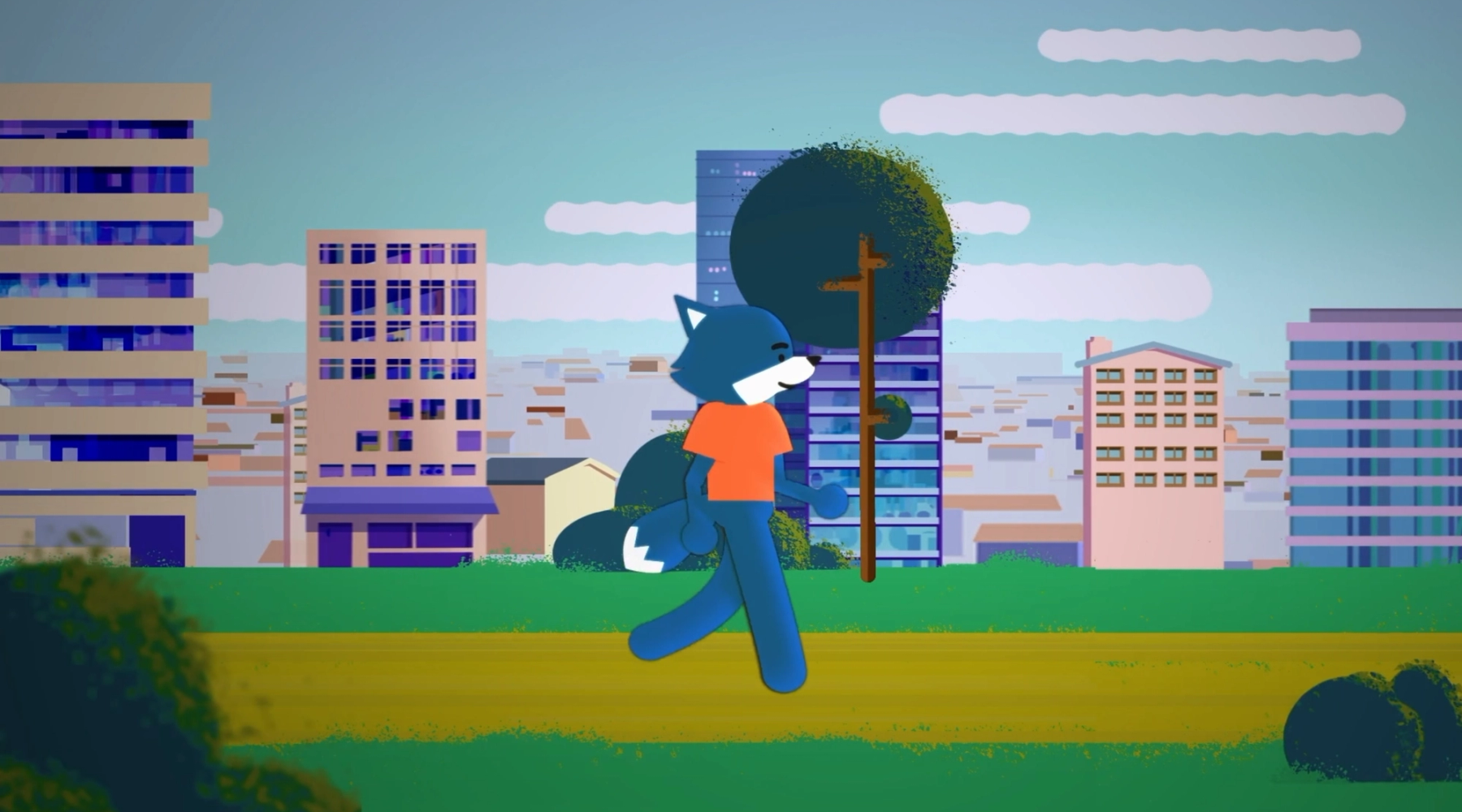
For ENGIE Home Services, the MiGo thermostat tutorial explains in motion graphics what a manual fails to get across: a figure that appears at the right moment sticks, the same figure in a table is invisible.
That is why it suits subjects that resist the camera — a service offer, a customer journey, a financial result, a reorganisation.
Your brand guidelines become a system that moves
For VEAMA, we started from their brand guidelines to build the animated version: the way the colors follow each other, the way the titles come in, the way the transitions run on.
That is what makes a series of pieces recognisable without having to put the logo in every shot.
A shoot dressed up rather than a fully animated film
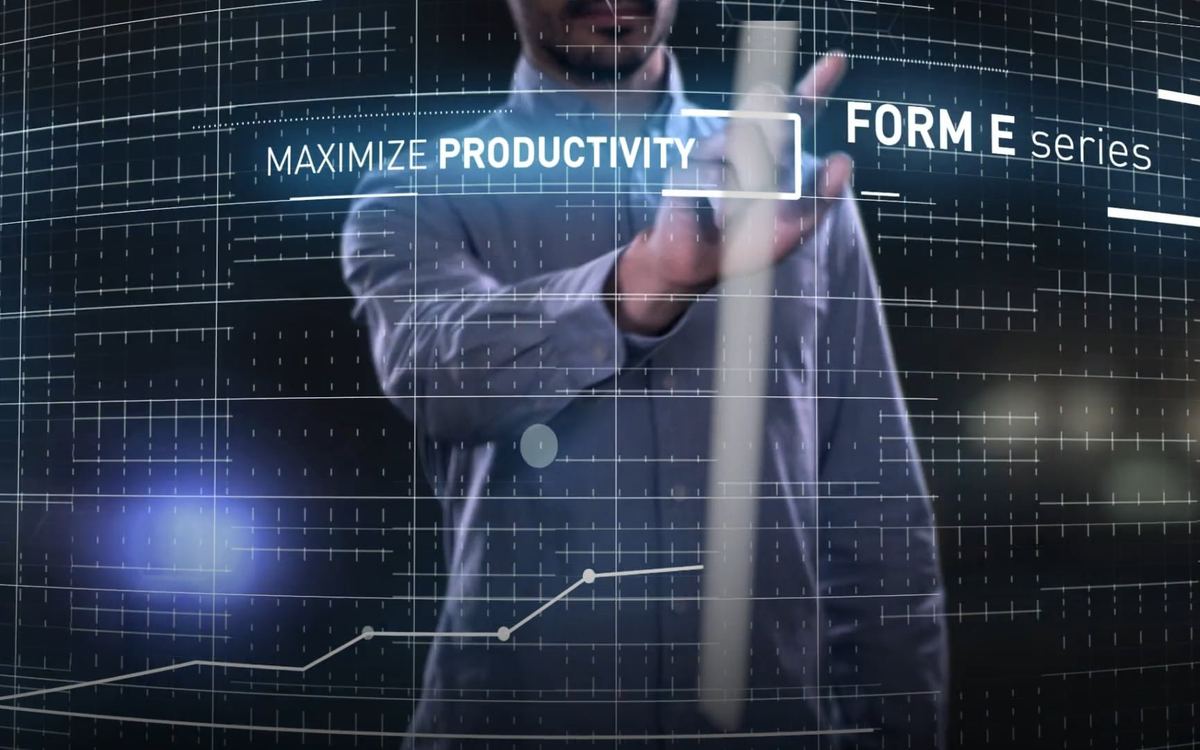
Many projects don’t need a fully animated film: they need real footage with the titles, the diagrams and the transitions that make it understandable.
So we often work in a mix — interviews, factory floor shots, animation over the top — because that is the best ratio between what it costs and what it gets across.
Explaining in thirty seconds what takes two minutes
A service, a flow, an idea: none of it has a shape. Motion graphics give it one, and fit the explanation into the time people are still watching.
Six situations where the subject has no shape
Explaining a service that can’t be filmed
A flow, a contract, a platform: none of it has a shape. Motion graphics give it one.
Cisco Video PlatformGetting a safety instruction across
A safety film is watched standing up, at the start of a shift. It has to be understood without sound, then understood again with it.
MASE Rhône-AlpesExplaining what a site or an online tool actually does
A platform demos badly in screenshots: you see the interface, not the service. The film tells the journey rather than clicking through it.
CERA — websiteSending greetings people watch to the end
A two-week window, and everybody at once. The only film people watch because it is dated.
UNIHA — 2025 greetingsSelling a technical product in one minute
The key arguments, a demonstration of use, and that’s it. Any longer and nobody reaches the end.
MLT Super-ScrewTurning brand guidelines into an animated system
Your colors and typefaces become rules of movement, reusable on the films that follow.
Araymond ShAReCe qu’on nous demande le plus souvent
How long does it take to produce motion graphics?
For a film of one to one and a half minutes in vector 2D with simple animation, allow three to five weeks. That covers the writing, art direction, graphic design, casting the voice talent, recording the voice-over and the animation itself. For a fully 3D film of one minute, allow four weeks at the very least.
What length should you aim for, depending on the use?
A few seconds for an advertising format or a short social clip. One to one and a half minutes for an explainer or a presentation of an offer — beyond that, attention scatters and the ending goes unseen. Several minutes for training or a tutorial, where the viewer has come looking for a specific answer.
Can you start from work we have already done?
Yes, and it shortens things accordingly. If the message and the script exist, we pick up at art direction and animation. For Engie Home Services, we started from a brief that was already framed, to explain how to use their app.
What is the difference between motion graphics and 3D animation?
Motion graphics animate two-dimensional graphic elements — text, icons, curves, flat color — to explain and to set a rhythm. 3D animation builds volumes and materials to show an object or a space. The two are often combined in the same film.
Do you need brand guidelines to start?
It is more comfortable, but it isn’t essential. Failing that, we start from your existing material — site, brochure, presentations — and work the rules out from them. The film then becomes the moment to set that visual grammar down.
Can the film be adapted into several formats?
Yes, and it is prepared from the storyboard rather than afterwards: a vertical format for social media isn’t made by cropping a wide one, it is composed. Planned from the start it costs almost nothing; added at the end it means reworking the animation.
Can the film be adapted into several languages?
Yes, and motion graphics are the format best suited to it: the text and the voice are replaced without touching the animation. One condition, to be set at storyboard stage — the frames must be sized for sentences longer than the original. Planned from the start, adding a language becomes a matter of days.
What we have produced in this field
The other services in communication & marketing
Show what no camera can film: the inside, the invisible, the not-yet-built.
Make the complicated legible, in seconds.
Key, composite, and place your speakers wherever you want them.
Get height, legally, city centers included.
The film that says who you are — to your clients, your candidates, your teams.
A project in motion graphics?
Let’s talk about your objectives before we talk about format.