


Immersive experiences & VR
Let people live a situation that can’t be shown any other way — and measure what they take from it.
You are looking for a virtual reality agency that will carry the project from the script through to running it on the day. We produce VR installations, 360 tours and virtual showrooms for trade shows, training and sales.
Every skill the production needs is held in house: writing the experience, 360 capture or 3D modeling, and app development. You deal with one person, from the prototype to going live.
An immersive video is watched by turning your head inside a filmed scene; a virtual reality experience is walked through, with choices that change what you see. That difference decides the budget as much as the schedule, and it is the first question we settle with you.

- Designing the experience and how it will be used
- 360 capture or 3D environment
- App development
- Installation, headsets and running the stand
- Session statistics
What we have already put inside a headset
For Nikon’s Vision Tour, we rebuilt the making of a spectacle lens by combining live action and 3D modeling, the whole thing delivered in virtual reality. The visitor follows the lens from one station to the next, in the order the process actually runs.
It is the format that fits when the subject is too big, too far away or too dangerous to be shown otherwise — a production line, a construction site, a technical gesture.

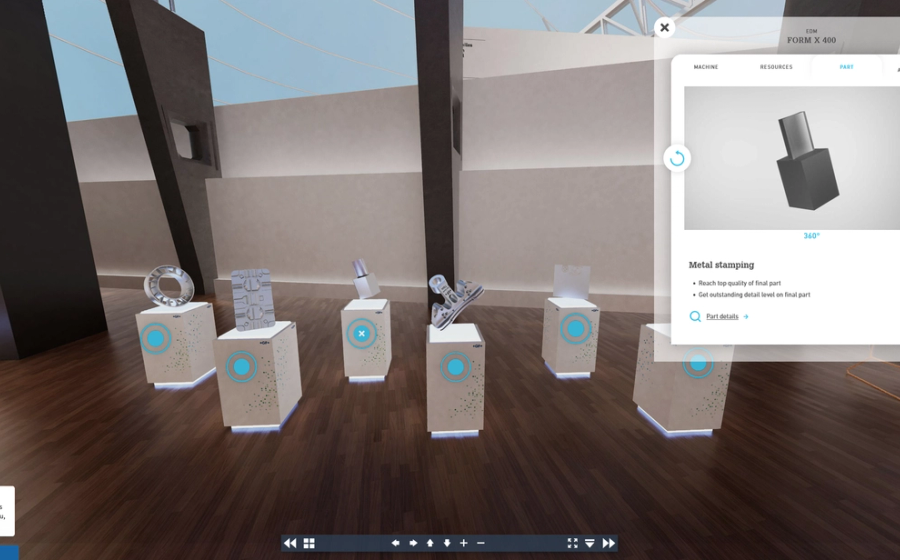
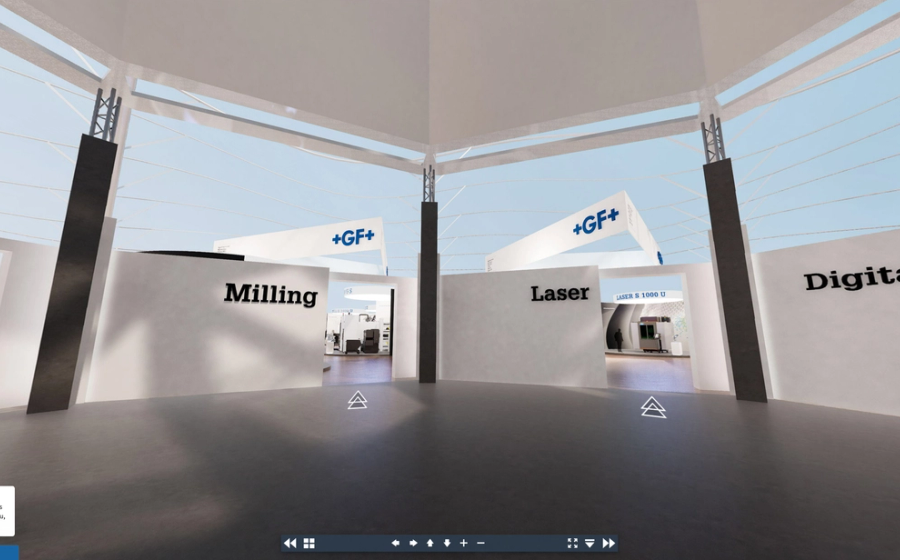

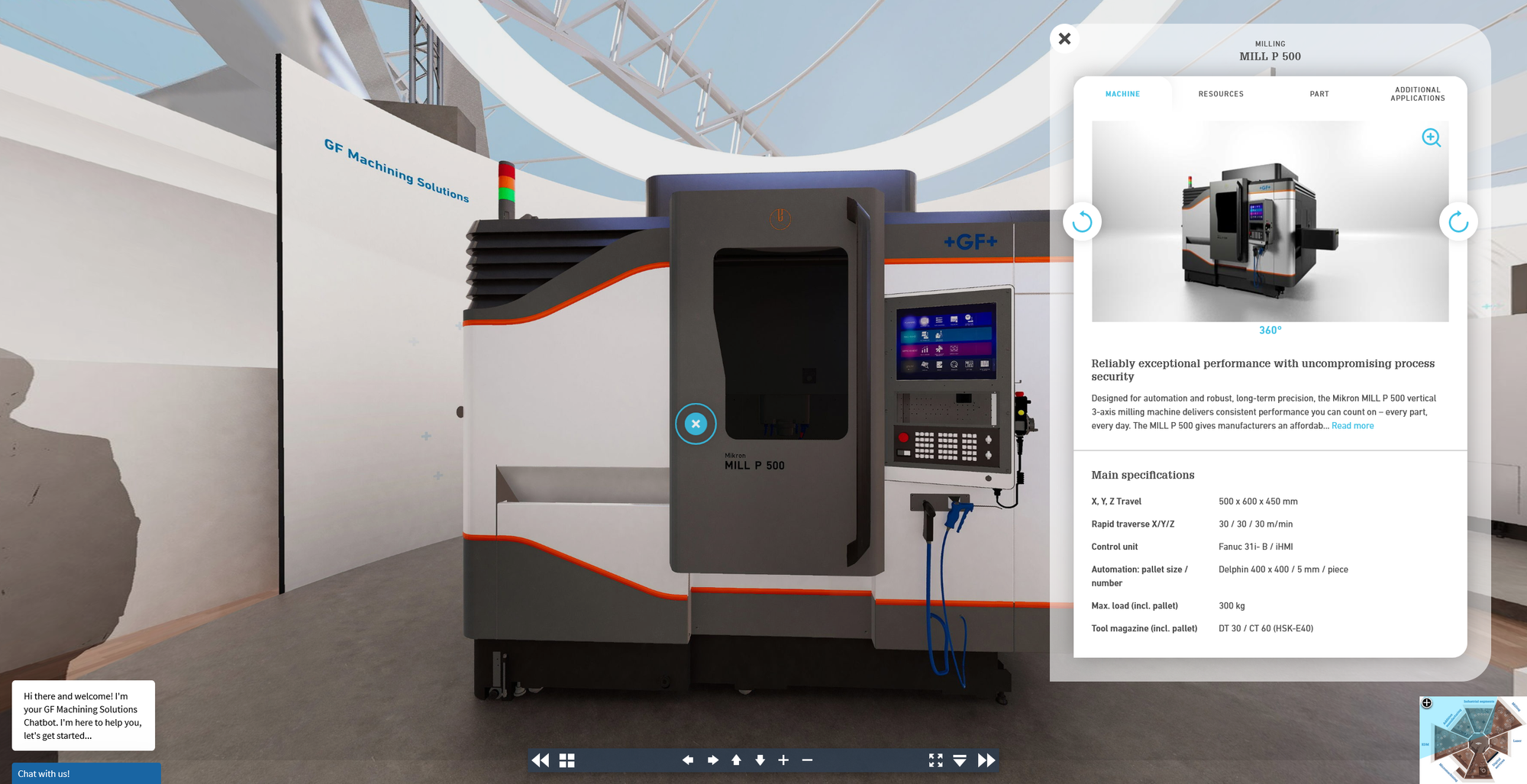
A showroom you visit from a browser
A machine tool doesn’t travel to the trade show: it weighs tonnes and its customer is on the other side of the world. The virtual showroom goes in its place.
Six situations, one principle
Discovering a place
Getting people inside a space before they ever set foot in it.
Radisson Blu — 360 VR videoExplaining a job
Letting people experience a workstation nobody can go near.
Pisten Bully — snow groomer 360 VRPresenting a region
Giving the scale of a site, an estate, a development project.
SERL — Puy d’Or business park 360 VRTraining teams
Rehearsing a gesture or a procedure without tying up the shop floor.
Cémoi — fine cocoa VRThe length of a session decides everything
At a trade show, a visitor gives you three to five minutes; in training, they may stay twenty. That length determines the script, the number of interactions and how many headsets it takes to absorb the flow without a queue.
Virtual Korner, our configurable virtual stand, starts from that constraint: the space is set up around the time you have and the number of visitors you expect.
(We set that length with you before the writing starts. This isn’t method for method’s sake: it is what changes the budget, not the number of shots.)
Try it before promising it
At Prats, the same subject was handled in 360 video on the real production line: no reconstruction, the machines running while we filmed. Seeing your own shop floor rather than a computer-generated image is often what settles the decision.
We own our headsets and we test the experience on real visitors before yours, in the conditions of the venue: standing up, with noise, and no instructions.
Ce qu’on nous demande le plus souvent
Which headsets and devices do your experiences run on?
Our 360 productions play on computer, tablet and phone, and in the headsets on the market, Meta Quest included. The choice follows the use: a headset for a trade show or for training, a browser when the experience has to travel as a simple link.
How many headsets should we plan for at a trade show?
The calculation starts from the expected flow and the session length: one headset handles roughly ten visitors an hour for a five-minute experience, counting the welcome and hygiene. Two to four headsets cover most stands.
Does the experience work without a headset?
Yes, and it is often worth planning for: the same experience comes in a browser version, viewable from a computer or a tablet. Your sales team can then show it in a meeting, with no equipment.
What happens to the experience after the event?
It stays usable internally — welcoming visitors, training, the trade shows that follow — and it is updated as your product changes. That is what separates an investment from a one-off attraction.
Can the experience be offered in several languages?
Yes: the text and the voices in an immersive journey can be swapped without redoing the modelling or the development. It works like a film, with one advantage — the visitor picks their language at the start, so there is no need to produce one version per market.
Six projects, six contexts
The other services in immersion
A project in immersive experiences & vr?
Let’s talk about your objectives before we talk about format.