

Projection mapping
Project onto a building, an object or a set, and turn its surface into a screen.
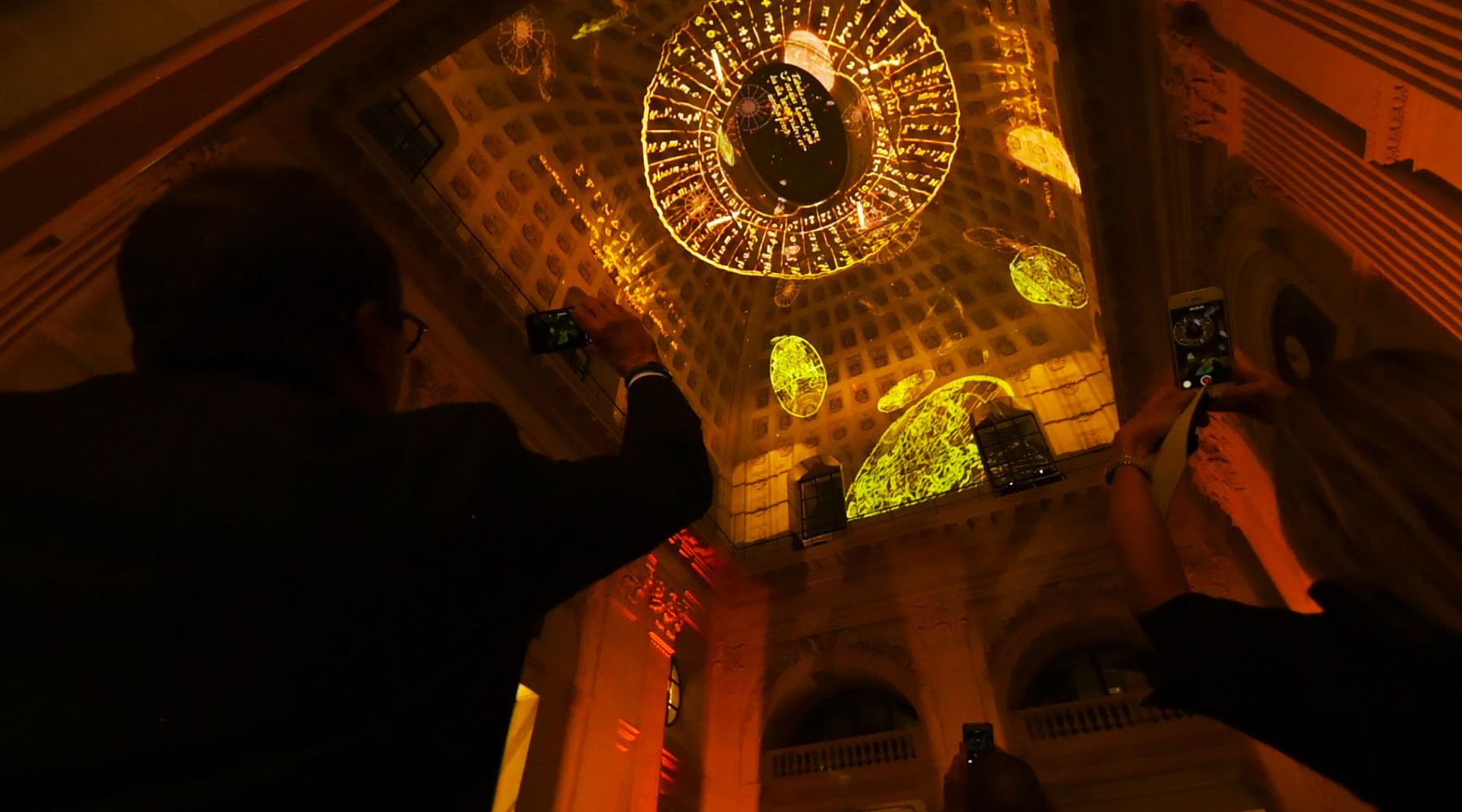
Projected onto a building, projection mapping means playing video and 2D or 3D animation that accounts for the architecture already there. Distorting the building or building a world of your own: the point is a genuine visual, immersive show. We take you from the storyboard through to scale-model projection tests and the show itself.
Bluevista means projection mapping on major events. Whether it is the 50th anniversary of Kuwait’s investment fund or the Bocuse d’Or, we can carry any kind of project. From the simplest to the most ambitious, in Paris, in Lyon or anywhere in France: hand us your architecture, and see it as you have never seen it.
Our work doesn’t stop at design and projection. We regularly handle several sides of the same event — as at Printemps in Lyon, where we covered the event, produced the mapping and filmed the mapping itself, holding the same standard on each.
With light and 2D and 3D animation, turn your buildings into a work of art. Whether your projection mapping is in Paris, Lyon or Geneva, we will give your event the scale it deserves.
- Survey of the building’s real geometry, before a word is written
- The show written from what the place has to say
- Imagery built in house — 3D, motion graphics, filming
- Projector count and positions worked out at design stage
- Filming of the projection and of the evening itself
A quick look, before the detail
One minute twenty of projections, shot on façades, domes and tables. It is the shortest way to grasp what the word “mapping” covers, since it means very different things depending on whether you are talking about a thirty-meter building or a tabletop model.
What we have already projected onto
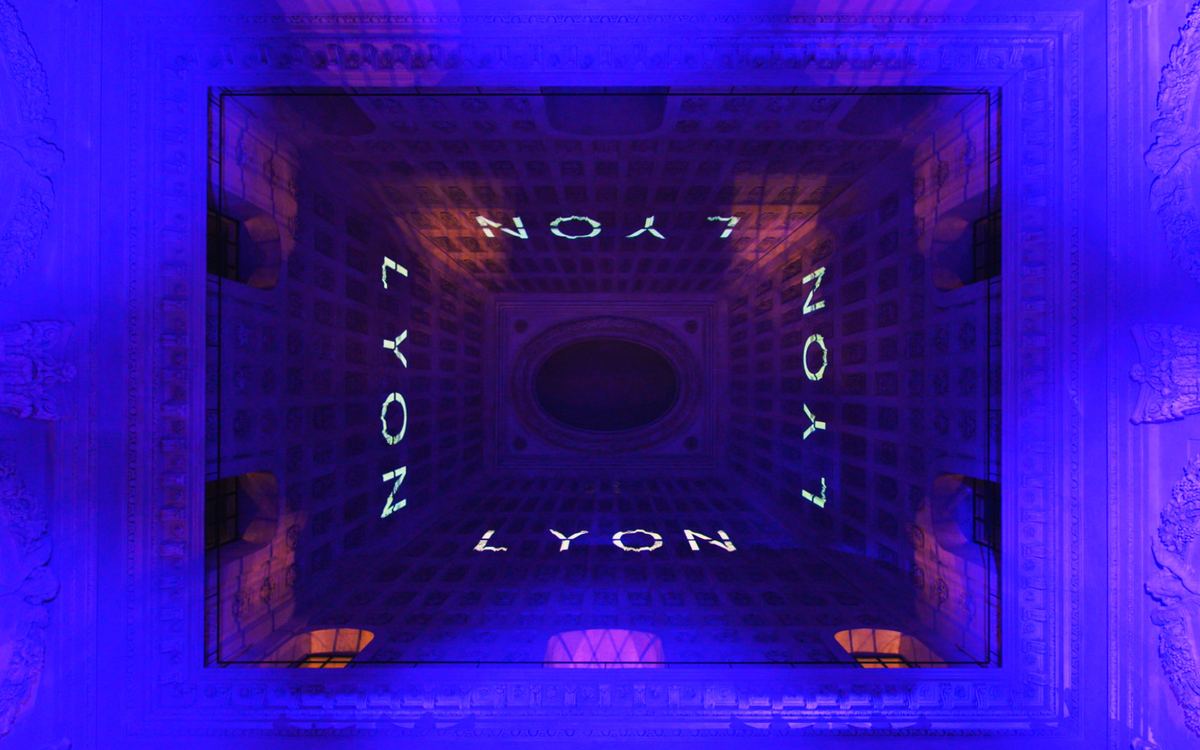
For the opening of the InterContinental in Lyon, under the direction of the agency TETRO, we produced two mappings — one on the façade, a second inside — and covered the inauguration: both projections ran all evening while the guests moved through the building.
At Printemps in Lyon we handled the whole thing: filming the event, designing the mapping, and filming the mapping itself. It is the case that shows best what an end-to-end team allows — three trades that would otherwise have meant three suppliers.
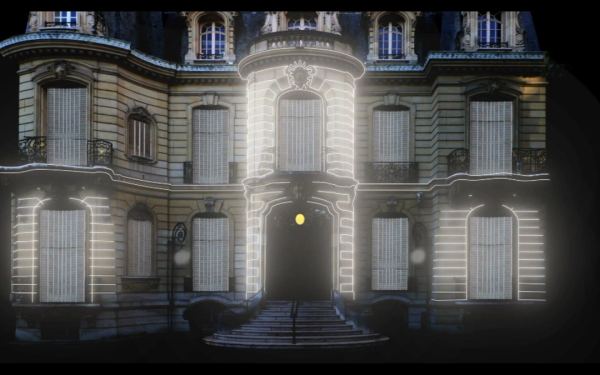
Elsewhere, a mapping in Paris under the direction of the agency Thera Conseil, for the fortieth anniversary of Siparex, and a projection onto the Musée Rodin where the architecture of the building serves the artist’s work.
The evening filmed while it was being projected
On the night of the opening, a second crew filmed while the projections ran: the guests arriving, the reactions under the dome, both mappings. This film is what is left of the evening for the people who weren’t there.
One team builds the mapping and the film of the evening. You deal with one person, and both deliveries arrive together.
A mapping is prepared on a survey, not on a photograph
A façade is never flat. Cornices come forward, windows sit back, and the wall is not square to the place where the audience will stand. So we survey the building’s real geometry before writing anything, and the imagery is built for that geometry.
That is what makes a projection sit on the relief instead of sliding across it, and it is also what lets us say at design stage how many projectors will be needed, and from which positions.
Writing before technology
A mapping holds for five to fifteen minutes in front of a standing audience. That length dictates the writing: one strong idea, carried from end to end, rather than a run of effects following each other for no reason.
So we start from the building and what it has to say — its history, its function, what gets decided inside it — then we look for the visual idea that will transform it. The technology comes afterwards, and it serves that idea.
Printemps in Lyon announces its new brand on its own façade
For a department store, changing brand means changing what people see from the street. The projection carried the announcement itself: the façade delivered the switch, in front of an audience for one night rather than in a press release.
And the recap film that put the evening into circulation
A projection lasts one evening. The recap film runs for weeks afterwards on the client’s channels and in their emails — and it is often the one that reaches the most people.
What tabletop mapping makes possible indoors
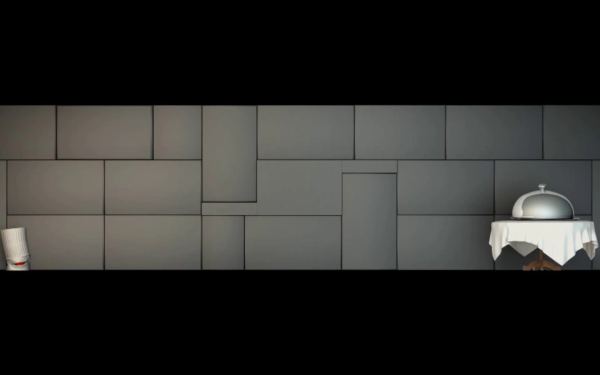
The same principle plays out small, on a scale model, a product or a banquet table: the projection dresses a real volume, in front of the guests, with no screen and no headset.
It is the format that suits conventions and gala dinners, where a façade is neither available nor visible from the room.
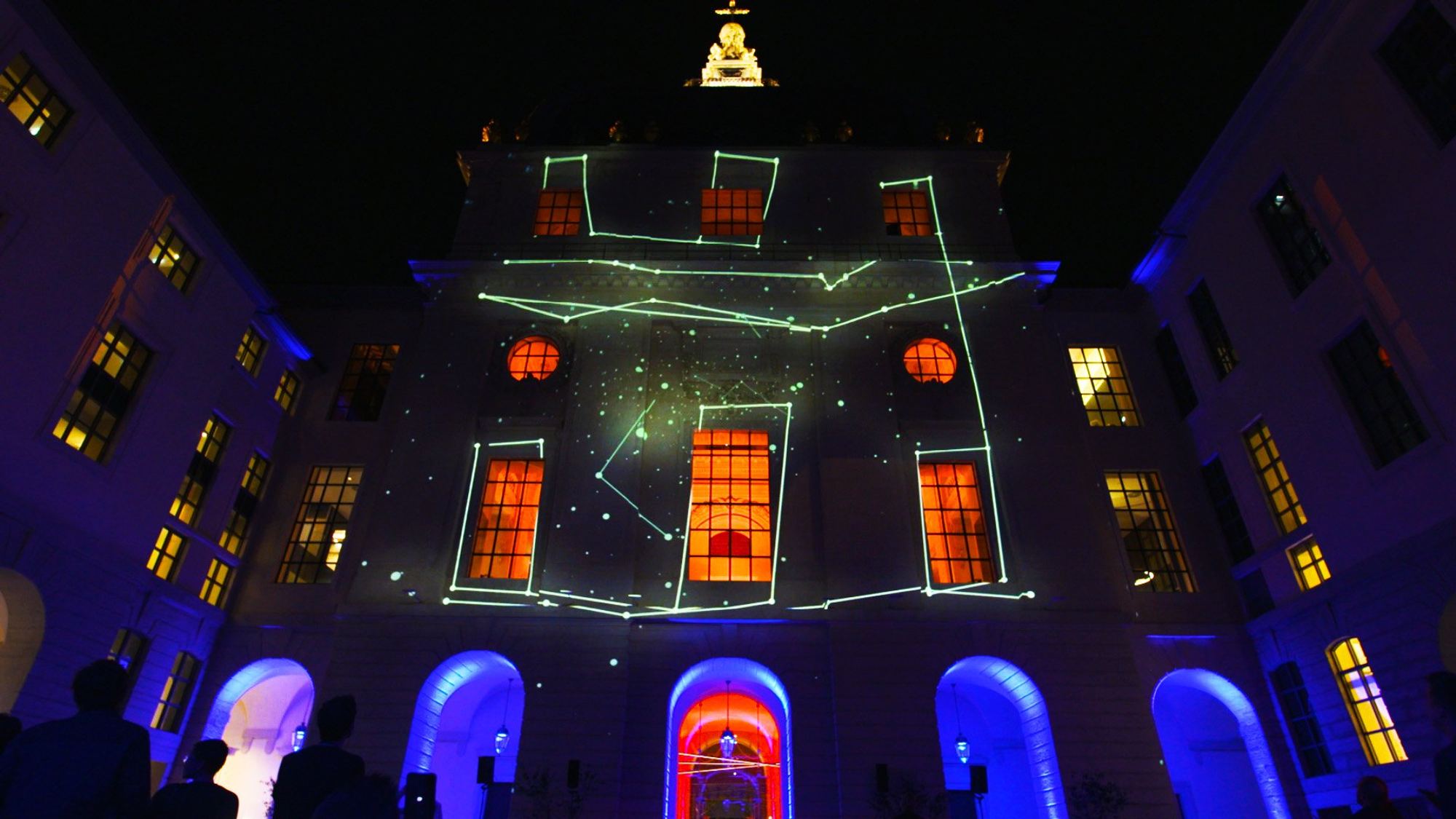
Two months of work for one evening
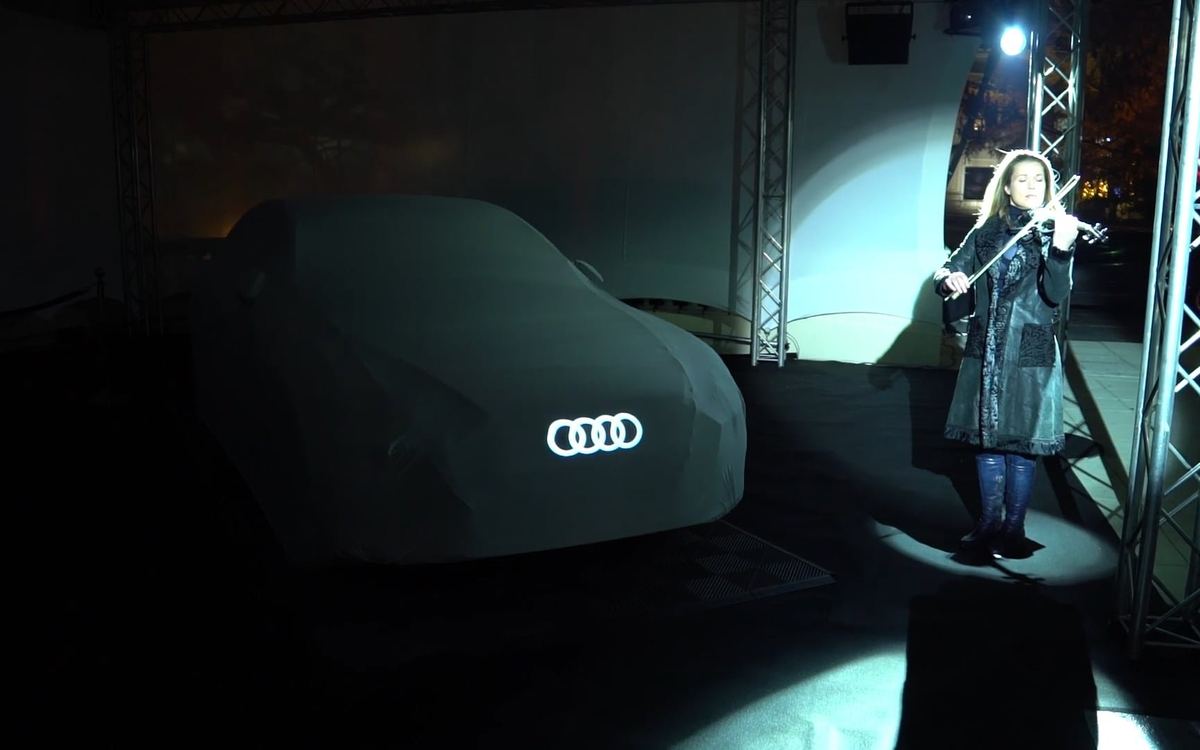
Production, imagery, projection engineering and music: four trades that don’t work together the rest of the year, brought together on one opening night.
Six situations where a façade beats a screen
Opening a building
The building you are opening becomes the subject of the show. The projection is set to its real architecture, cornices included.
InterContinental LyonAnnouncing a rebrand
For a retailer, changing identity means changing what people see from the street. The façade carries the announcement.
Printemps de LyonMarking a company anniversary
Forty years make a poor speech. A projection lasts a few minutes and is watched standing up, glass in hand.
Siparex 40 yearsDressing a gala dinner
On a banquet table or a scale model, the same principle plays out small — no screen, no headset, in front of the guests.
ArtcurialLaunching a product in front of an audience
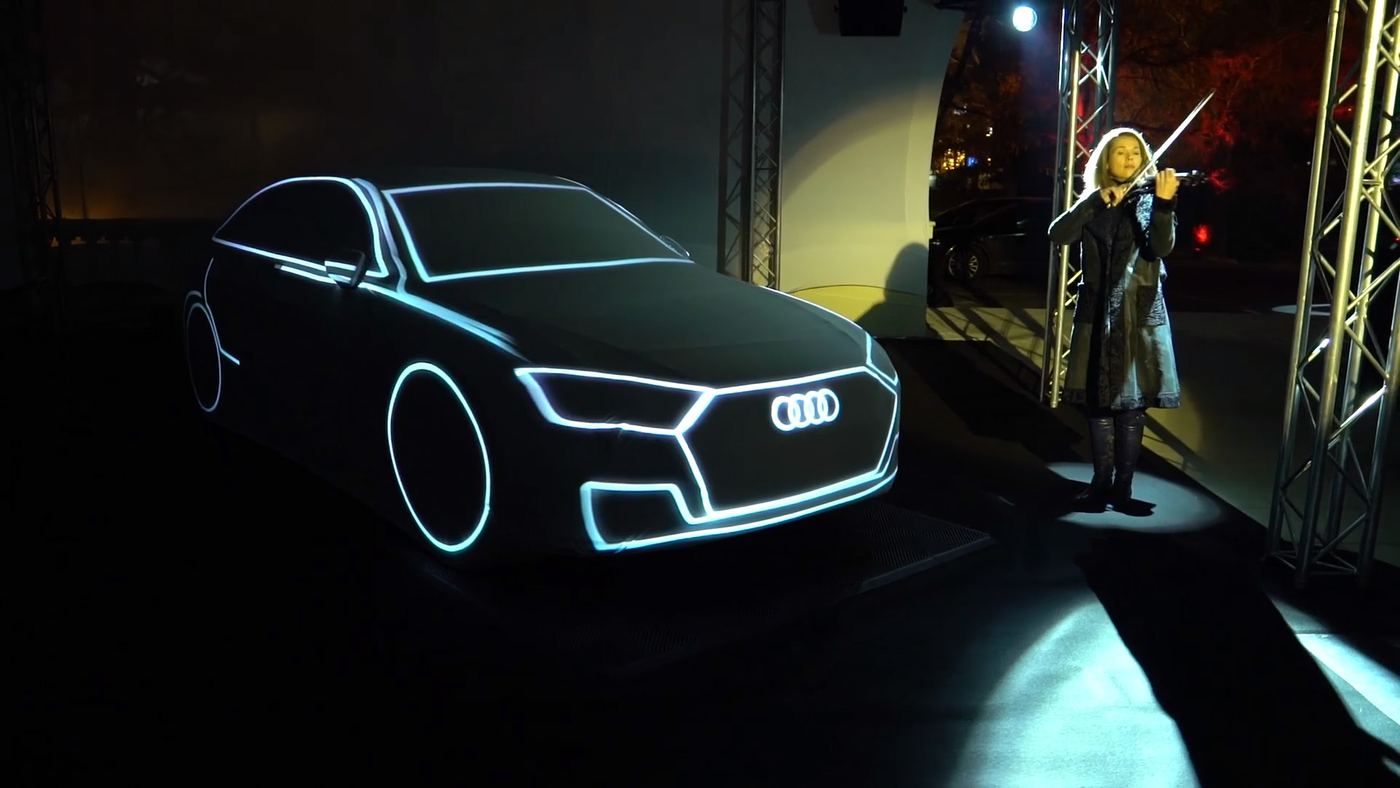
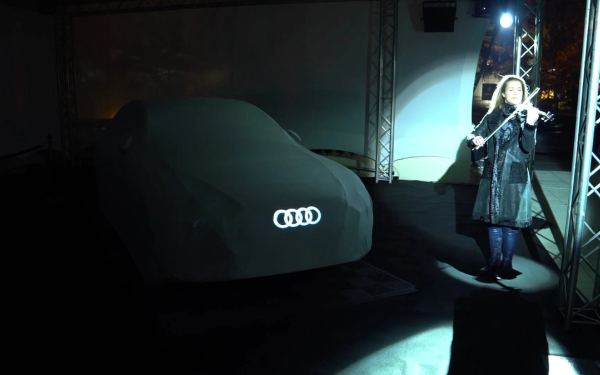
The projection dresses the object itself. The car is no longer sitting on a stand: it is drawn by light.
Audi A8Taking part in a festival of lights
A public event brings constraints a private one never has: visitor flow, safety, and street lighting to negotiate.
Fête des LumièresCe qu’on nous demande le plus souvent
How long does it take to prepare a projection mapping?
Allow six to eight weeks between the survey of the building and the projection, with the writing and the imagery taking most of that time. Technical scouting and tests happen on site, at night, a few days beforehand.
Does street lighting have to be switched off during the projection?
Usually yes, at least on the façade concerned: a projection is fighting any light that hits the wall. We approach the city authorities in advance — it is a process we know well.
Can you project onto a listed building?
Yes. The projection doesn’t touch the fabric of the building and leaves no trace, which makes it compatible with most heritage protections. Permission depends on the building’s owner, and is requested several weeks ahead.
How much does a projection mapping cost?
The price rests on four things: the surface to cover, which sets the number of projectors; the length of the film, since every minute is written and produced for the geometry of the venue; the share of 3D; and the technical side of the evening, from the control room to the permits. A table mapping for a gala dinner and a thirty-metre façade therefore have nothing in common. Give us the venue and the date: you receive a costed proposal, built for that venue.
What is architectural projection mapping?
It is the projection of images made for the exact geometry of a building: cornices, windows, reliefs. The image fits the façade instead of sitting on it, which makes it possible to move, open or transform it before the audience’s eyes. At Printemps in Lyon, the façade carried the announcement of the store’s new brand.
What we have produced in this field
The other services in events
Project onto a building, an object or a set, and turn its surface into a screen.
Go live, with a set built for it and the reliability of a proper control room.
Film your event, and come away with enough to keep talking until the next one.
A project in projection mapping?
Let’s talk about your objectives before we talk about format.