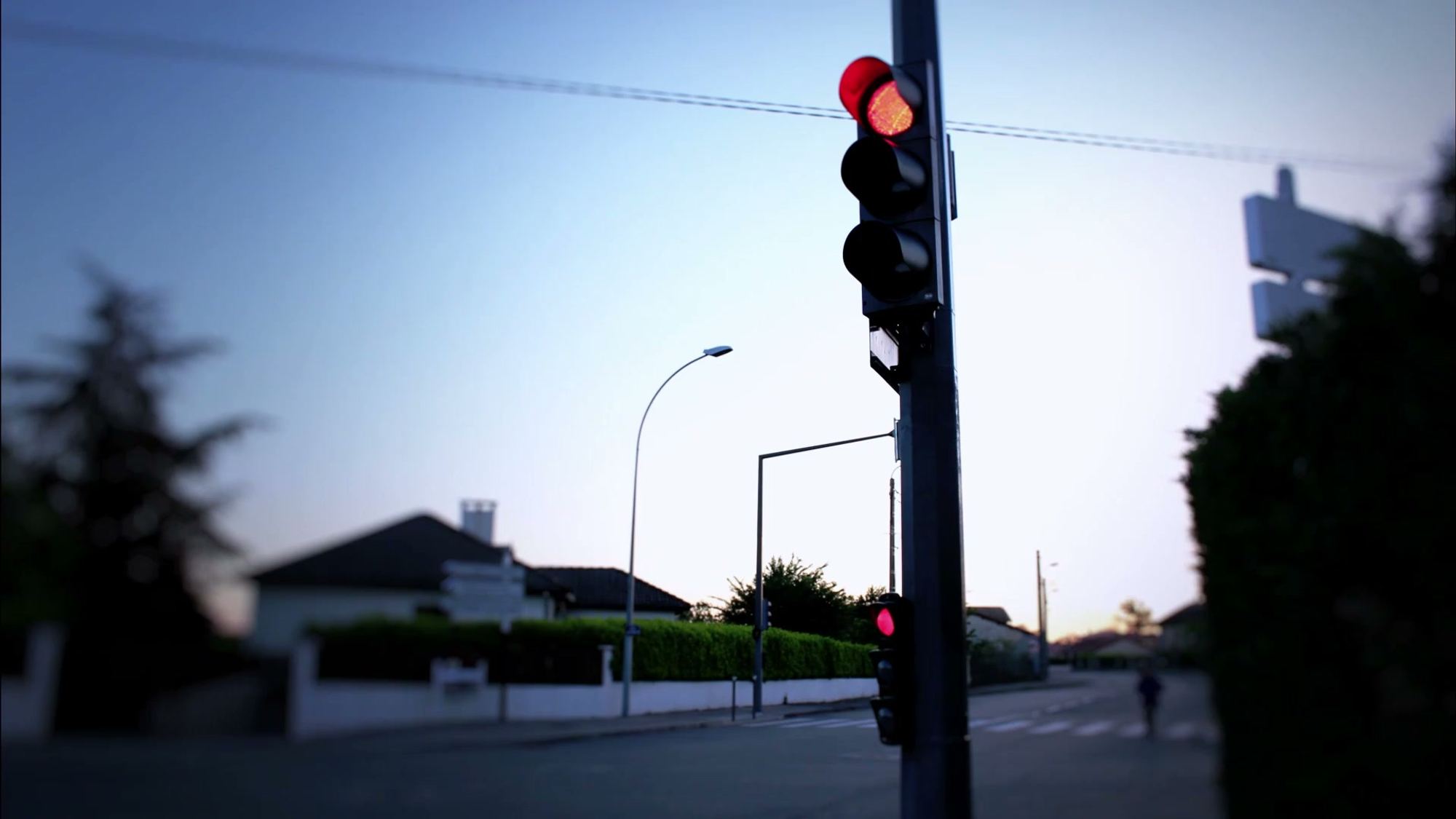
Expercité is the Eiffage Énergie Systèmes brand dedicated to towns and local authorities. Behind the name sits a platform that connects everything already wired into a city without anyone seeing it: street lighting, traffic lights, speed feedback signs, street furniture, video protection, charging points, gas and broadband networks.
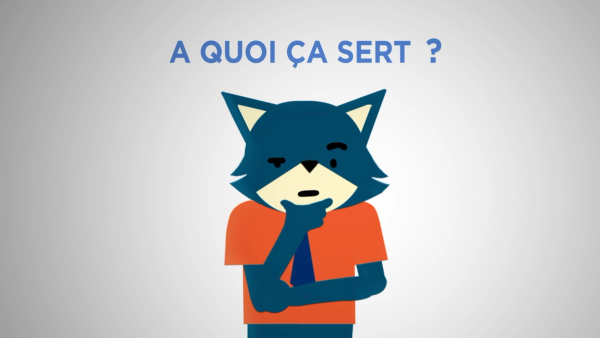
The problem was not a sales problem, it was a teaching one. A mayor or a head of technical services cannot picture urban hypervision until they have seen it. And explaining four families of services — quality of life, mobility, safety, connected territories — took a technician, a meeting, and vocabulary the other side does not have.
So the film had one precise job: land the concept before the conversation starts.
Showing the wires nobody sees
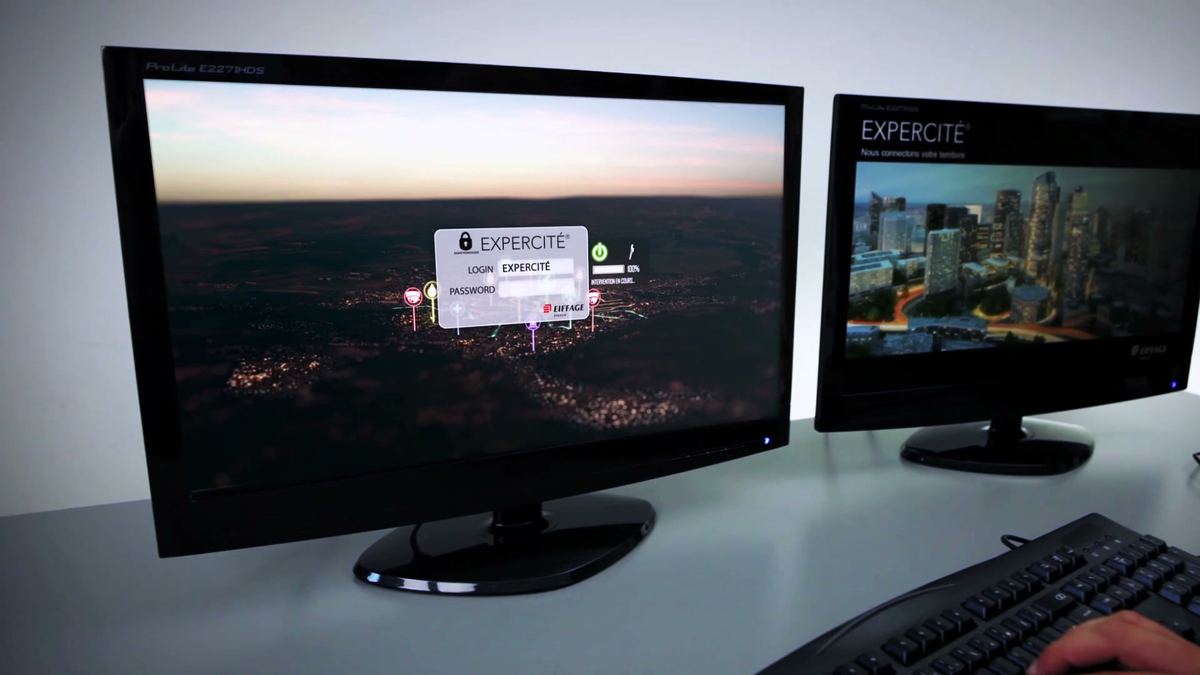
The approach was to make the network visible. The film starts from real shots of the town and reveals, on top of them, what runs through it: links draw themselves in light between the points, objects switch on one by one and name themselves. What was an abstraction becomes a map.
Three techniques work together: time lapse filming for scale and the shift from day to night, 3D animation for the aerial views of the town, and motion design for the overlay that names each element. The script, the visual concept and every image were written and made by our teams, from the specifications of the offer.
A service understood in 1 min 30
The film runs a minute and a half. That is the time Expercité has, in a meeting, to get across what a city run from a dashboard actually is — and it ends on that dashboard, screens lit, an operator at the keyboard.
It does not replace the salesperson: it goes ahead of them. It lands the concept, clears the misunderstanding, and lets the conversation start where it used to stop. That is the exact point where a presentation film earns its cost.
What happened next
The principle was used a second time for Expercité, on the energy and roads side: a whole town rebuilt in 3D, traveled by the same vocabulary of markers naming what they point at — a defibrillator, a light point, a piece of road equipment. Same length, same visual grammar.
We have no audience figure to put against this film. What we can say is that there was a second one.